

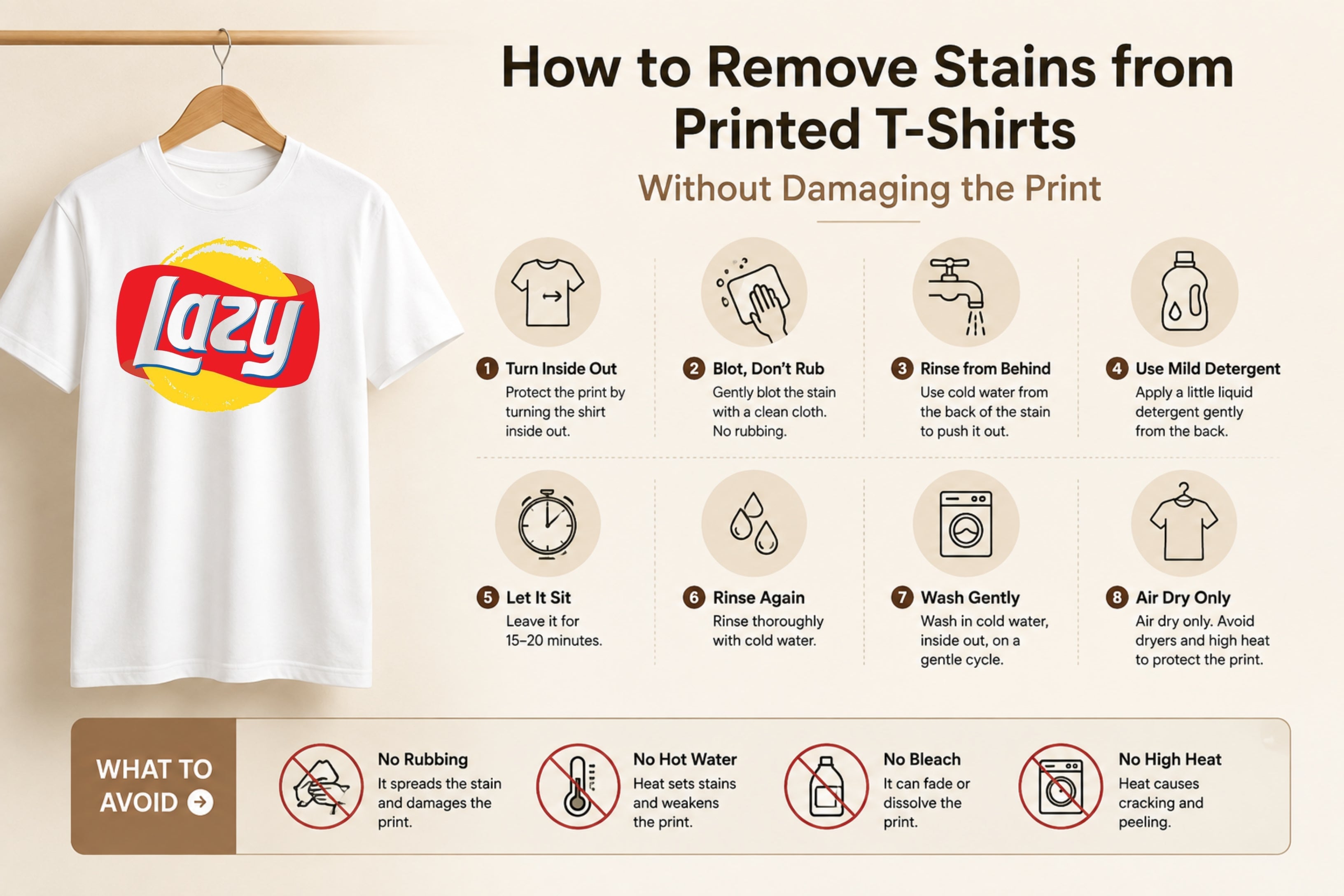
The safest way to remove a stain from a printed t-shirt is to treat it from the back of the fabric, not directly on the print, using cold water and a mild detergent, then air dry instead of using the dryer. Rubbing, hot water, bleach, and high heat are what actually damage prints, not the stain removal itself. Get the method right and most stains lift clean without cracking, fading, or peeling the design.
Why Regular Stain Removal Advice Damages Prints
Most stain removal guides are written for plain fabric, not printed ones, so they miss a key detail: the print sits on top of the fibre, and it reacts differently to heat, rubbing, and chemicals than the shirt itself does. Scrubbing straight on a stain pushes it deeper into the print and can crack a screen print or peel a vinyl design. Hot water and tumble drying set the stain and also soften the ink, making it more likely to smear or crack under heat. Bleach and alcohol-based removers strip colour, but on a print they can dissolve the ink layer completely. Once you know this, stain removal becomes less about strong products and more about being careful with heat and contact.
Step-by-Step: Removing a Stain Without Touching the Print Directly
- Turn the shirt inside out. This puts the fabric, not the print, facing up, so you're treating the stain from the back.
- Blot, don't rub. Use a clean cloth to press out excess liquid or residue. Rubbing spreads the stain and works it into the print's edges.
- Flush with cold water from behind the stain. Hold the fabric under a cold tap with the stain facing down, so the water pushes the stain out and away from the print, not through it.
- Apply a small amount of mild liquid detergent directly to the stain, working it in gently with your fingers or a soft cloth. Skip powders, since undissolved granules can sit on the print and cause texture damage.
- Let it sit for 15-20 minutes, then rinse again in cold water.
- Wash in cold water, inside out, on a gentle cycle. Avoid hot water completely for printed items.
- Air dry only. Skip the tumble dryer until you've confirmed the stain is fully gone, and even then, heat is the leading cause of cracked or peeling prints over time.
What to Avoid on Printed Fabric
- Chlorine bleach — breaks down ink pigment and can bleach a visible patch straight through the design.
- Rubbing alcohol or acetone-based removers — these dissolve plastisol and vinyl prints, especially on cheaper transfers.
- Direct ironing on the print — always iron inside out, or place a cloth over the print if ironing from the front.
- High heat tumble drying — this is the single biggest cause of prints cracking or peeling over repeated washes, even without any stain involved.
- Hard scrubbing with a brush — fine for plain cotton, but it lifts print edges and creates a cracked, flaky look over time.
How the Removal Method Changes by Print Type
Not all prints react to stain removal the same way, and this is something most stain guides skip entirely.
| Print Type | Safe to Treat? | What to Avoid |
|---|---|---|
| Screen print (plastisol) | Yes, cold water + mild detergent | Alcohol, high heat, direct scrubbing |
| Vinyl / heat transfer | Yes, but gentler | Any solvent-based remover, ironing directly on it |
| DTG (direct-to-garment) print | Yes, most stain-resistant of the three | Bleach, since it fades DTG ink fastest |
| Sublimation print | Treat very gently | Hot water, since it can reactivate and bleed the dye |
Want prints that last longer? Browse our t-shirts for men in UAE and t-shirts for women in UAE made with quality prints.
Fresh Stains vs Set-In Stains on Printed Tees
A fresh stain almost always comes out with the cold water and detergent method above, since it hasn't had time to bond with the fabric fibres. A set-in or dried stain needs a longer soak, but the print rule stays the same: soak the fabric side down in cold water with detergent for 30 minutes to an hour rather than scrubbing harder. If a stain is still visible after washing, don't tumble dry it. Repeat the treatment instead, since drying a stain in heat can bake it into the fabric permanently, right next to the print.
Frequently Asked Questions
Can I use OxiClean or a stain pen on a printed t-shirt?
Yes, as long as you apply it to the fabric side, not directly on the print, and avoid any product containing chlorine bleach or alcohol.
Why does my printed t-shirt crack after a few washes even without stains?
This is almost always caused by tumble drying on high heat or ironing directly on the print. Heat is the main reason prints crack, peel, or fade over time, separate from any stain removal.
Is it safe to bleach a white printed t-shirt to remove a stain?
No. Chlorine bleach breaks down the ink and will leave a faded or discoloured patch on or around the print, even if you're only trying to whiten the fabric.
How do I remove an oil or grease stain from a printed shirt?
Blot excess oil first, then apply a small amount of dish soap directly to the stain (from the back), let it sit for 10 minutes, and wash in cold water. Avoid hot water, since heat sets oil stains permanently.
Should I wash printed t-shirts inside out every time, not just when treating a stain?
Yes. Washing inside out reduces friction on the print during every wash, not just when you're removing a stain, and it noticeably extends how long the design stays crack-free.
What's the safest detergent for stains on printed clothes?
A mild, liquid, colour-safe detergent without bleach or optical brighteners. Powders and bleach-based formulas are more likely to sit on the print surface and cause long-term damage.